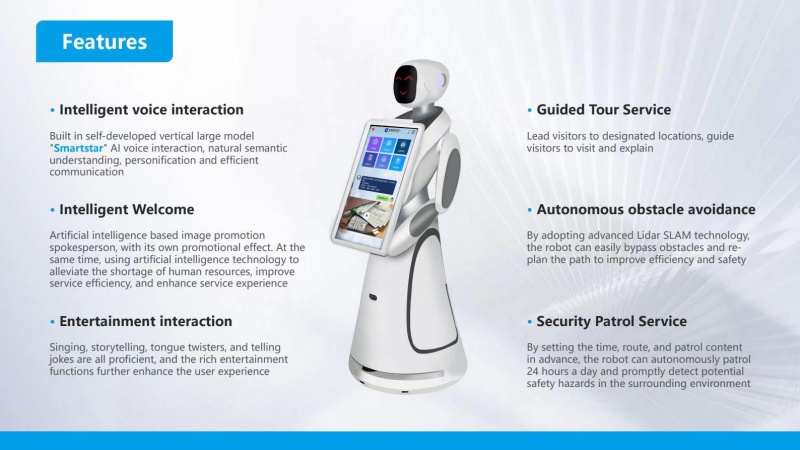
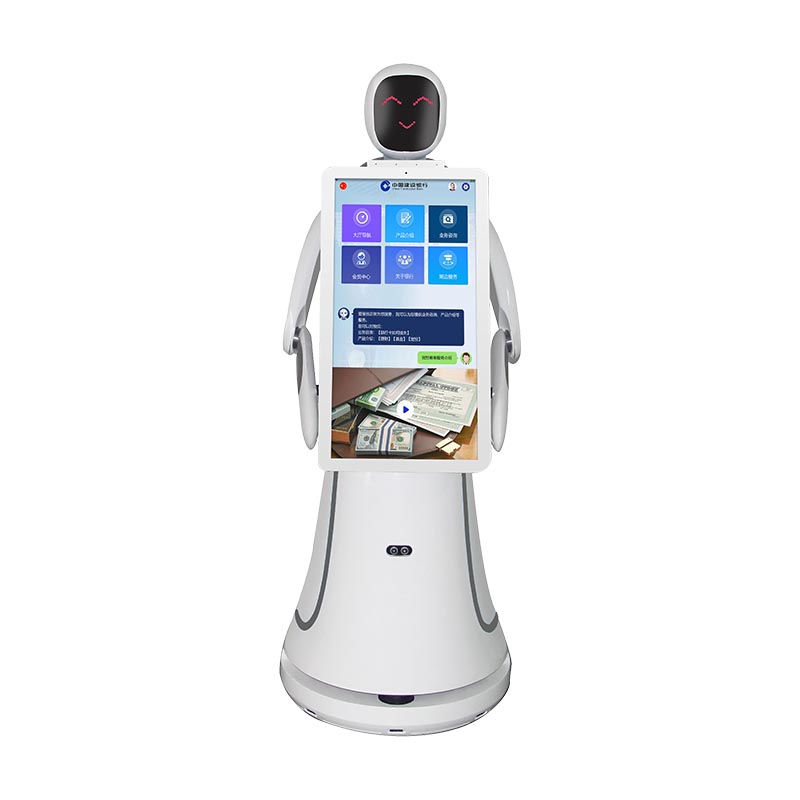
These robots utilize autonomous navigation, intelligent interaction, and multi-sensor fusion technologies to transform hotel operations and provide convenient, efficient service experiences for guests.
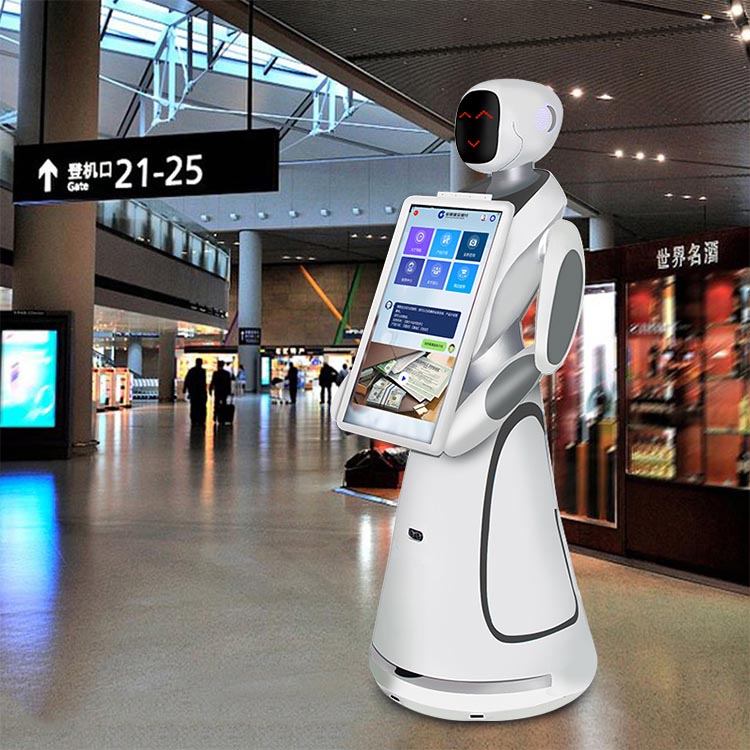
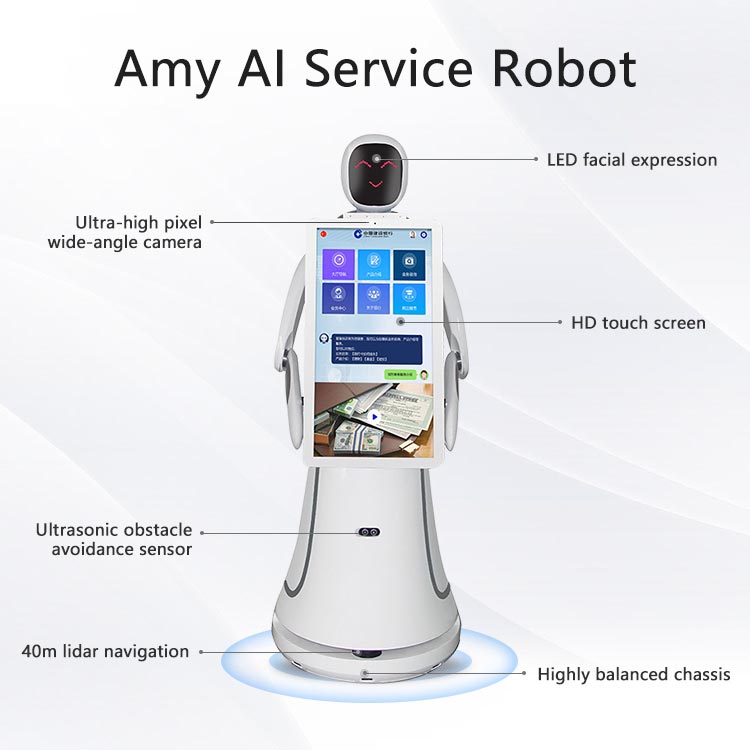
The core technology lies in its advanced positioning navigation system and environmental perception capabilities. Utilizing lidar, SLAM (Simultaneous Localization and Mapping) technology, and multi-sensor information fusion algorithms, these robots achieve precise positioning and path planning in complex hotel environments.
Specifically, the robots use improved rolling window obstacle avoidance algorithms to achieve responsive and stable movement capabilities.This allows them to navigate flexibly through crowded areas during peak hours and safely reach their destinations.High-precision laser SLAM autonomous positioning and navigation combined with 3D visual obstacle avoidance technology ensure the robot’s safety during movement.
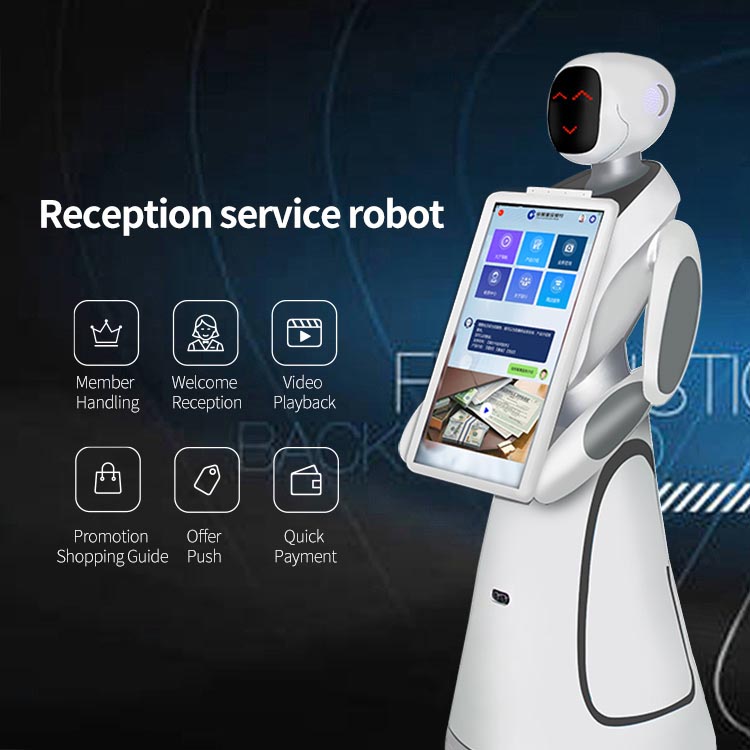
Intelligent Guiding and Concierge Services: Robots can greet guests in the hotel lobby, provide concierge services, answer frequently asked questions, and guide guests to various hotel facilities.
Item Delivery Services: Robots can receive orders, automatically retrieve items, and deliver them to guest room doors, including takeaway food, toiletries, and unmanned retail products.
Information and Advisory Services: Through intelligent voice interaction systems, robots can answer various guest inquiries, such as hotel service information and local travel guides.
Cross-floor Services: Robots can automatically use elevators to provide cross-floor services. They connect to and control elevators via WiFi to autonomously reach target floors
Enhancing Operational Efficiency: Robots can work uninterrupted 24/7, automatically recharge, and operate unmanned, significantly reducing labor costs for hotels.
Improving Service Quality: Robots provide consistent and accurate service, reduce human error, and ensure every guest receives an equally high-quality experience.
Contactless Service: In the pandemic era, robots provide contactless service, reducing the risk of disease transmission and increasing guest sense of safety.
Elevating Guest Experience: Robotic services are both novel and convenient for guests, significantly improving satisfaction and impressions of the hotel’s technological sophistication.
According to the national standard “Robotics – Performance criteria and related test methods for service robots – Part 2: Navigation”, the navigation performance of service robots needs to be determined by pose accuracy and repeatability, and the ability to detect and avoid obstacles.
Hotel intelligent navigation robots typically need to meet the following technical requirements:
-
Positioning accuracy: Able to accurately determine its own position in the use environment, with positioning accuracy typically within 1 meter and a standard deviation not exceeding 0.5 meters.
-
Movement speed: Should reach an average walking speed, approximately 3-5 km/h, to adapt to the movement rhythm of people in the environment.
-
Obstacle avoidance capability: Able to detect and avoid static and dynamic obstacles in real-time to ensure travel safety.
-
Cross-floor navigation: Able to interface with elevator systems for automatic elevator operation and cross-floor services.
With the continuous development of artificial intelligence, sensor technology, and the Internet of Things, hotel intelligent navigation robots will become more intelligent, efficient, and versatile.
In the future, we can anticipate robots with enhanced environmental understanding, more natural human-computer interaction, and more powerful task execution capabilities.
They will become an indispensable part of smart hotels, fully participating in various hotel service tasks.
Hotel intelligent navigation robots are not just gimmicks for technological demonstration but are effective tools that substantially enhance hotel service quality, reduce operational costs, and improve guest satisfaction.
As technology matures and costs decrease, such robots will see increasingly widespread application in the hotel industry.